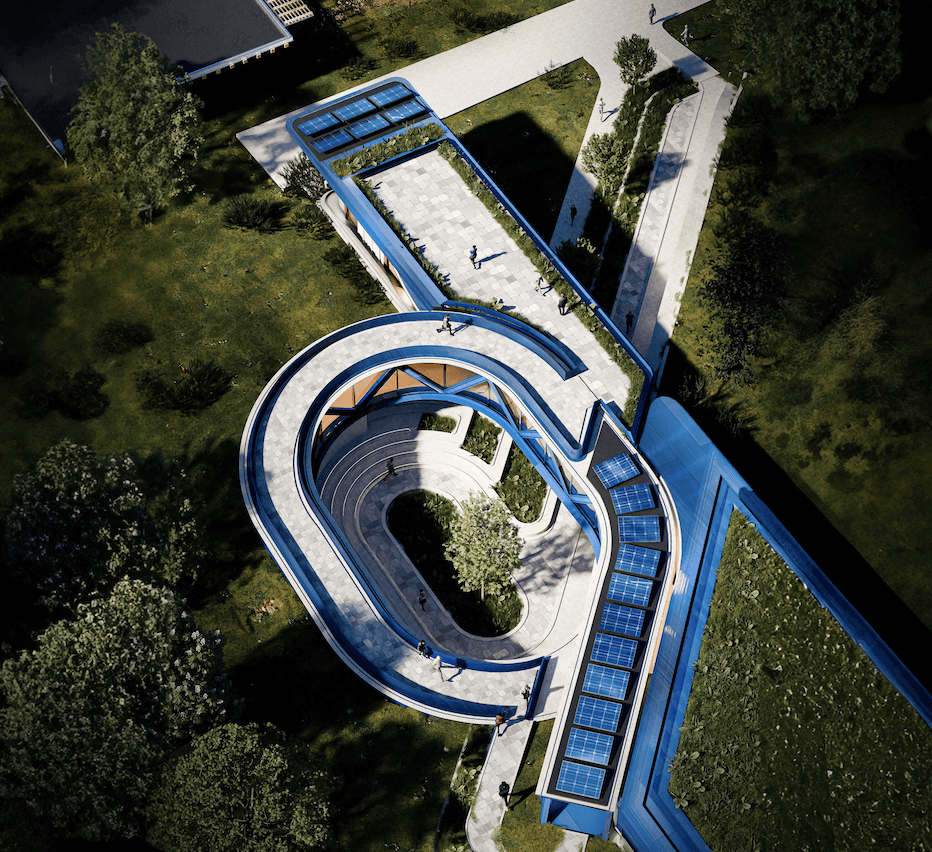
Biomorphic
In this workshop, led by Nic Lee (OXMAN), I explored concepts of growth, agency, and adaptation through computational design strategies inspired by natural systems. The central task, “growing a chair”, required designing through behavior rather than form. Using Craig Reynolds’ boid algorithm, I simulated collective movement and interaction, while finite element analysis informed structural performance under load. Kernel density–based edge bundling was then applied to organize and consolidate material pathways. Together, these tools allowed natural and synthetic environmental forces to shape the final geometry, resulting in a chair that emerges from processes of accumulation, negotiation, and structural optimization rather than predetermined design.
Project
Chair
Year
2021
Client
AAVS Visiting School Toronto
Tools
Autodesk Maya, Side FX Houdini, Adobe Suite, Vray 5, 3D Printing
Scroll down
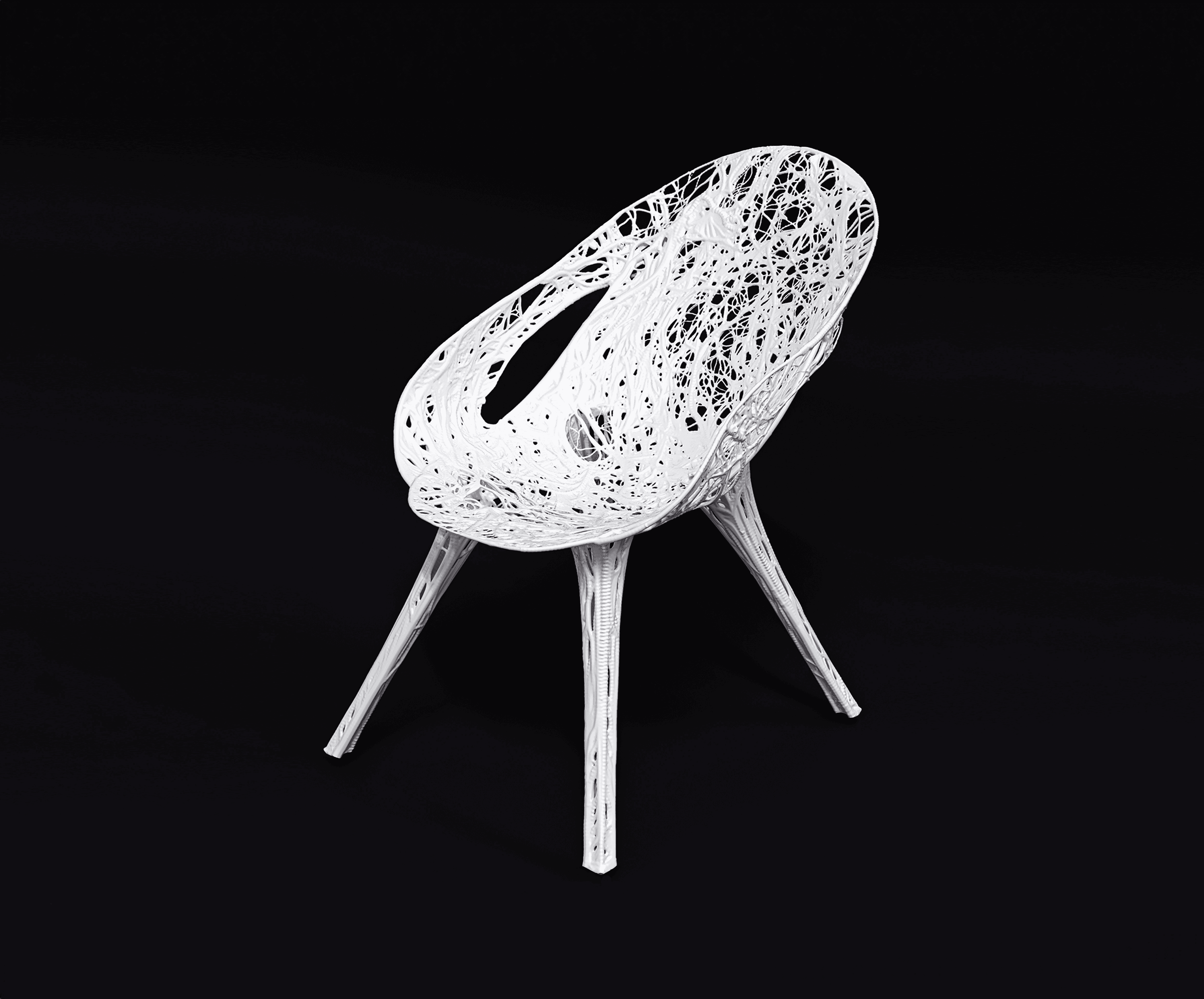
A biomorphic chair shaped by natural behavior.
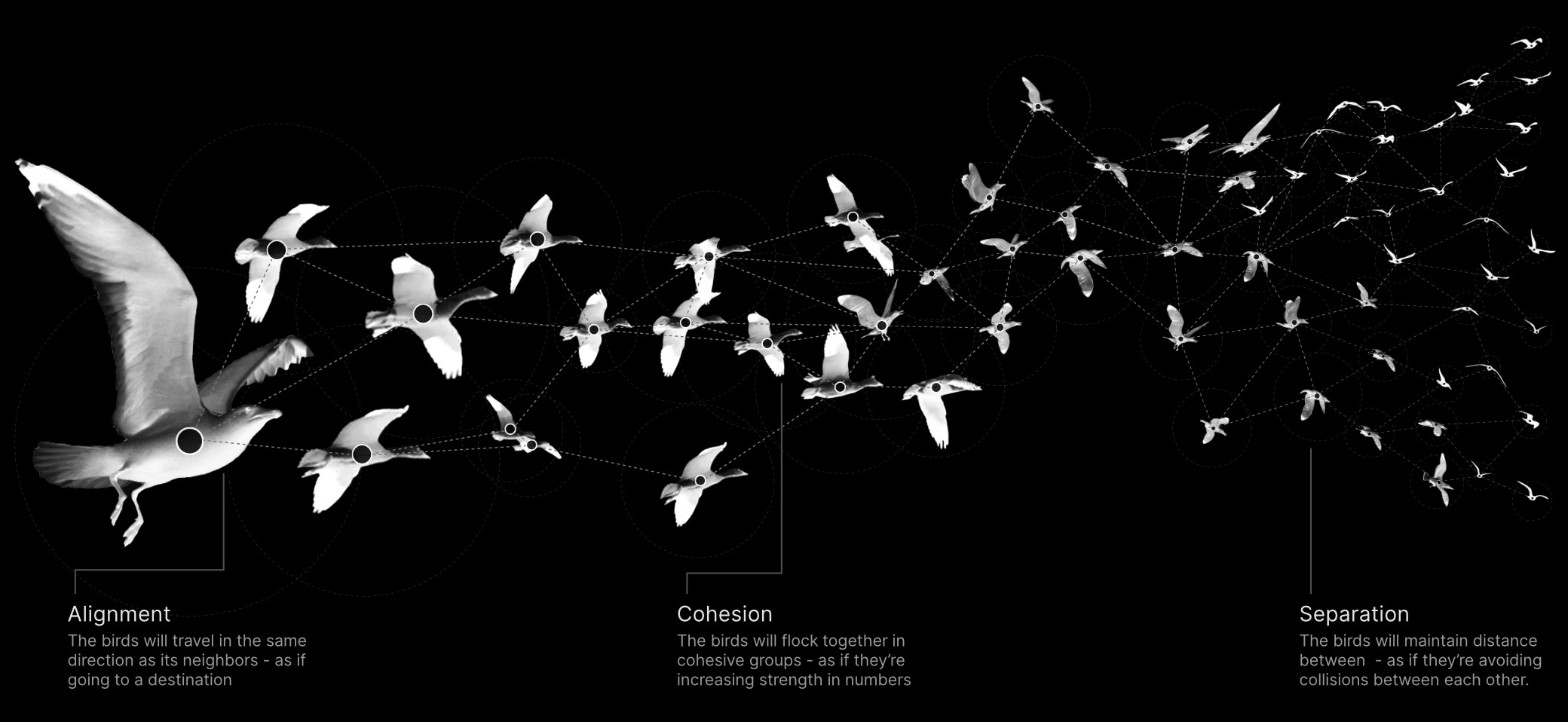
The boid algorithm is an artificial life program, developed by Craig Reynolds in 1986, which simulates the flocking behavior of birds using three simple rules...

01 - Alignment - Given the intended 3D printing of the chair, agents start at the bottom and are pushed upwards as if they were being printed.

02 - Cohesion - This parameter is controlled by an structural simulation (FEA) of the chair as well as areas of the chair that may be under a higher stress such as the edges.

03 - Separation - This parameter is controlled by a human contact map of the chair which ensures seating areas will have surfaces.

04 - Target - This is an artificial parameter which gives me more control over the movement of the flock. In this result it’s being used to guide agents up the arm rests and the center of the chair.

Simulation of agents responding to environmental forces within the chair’s boundary.
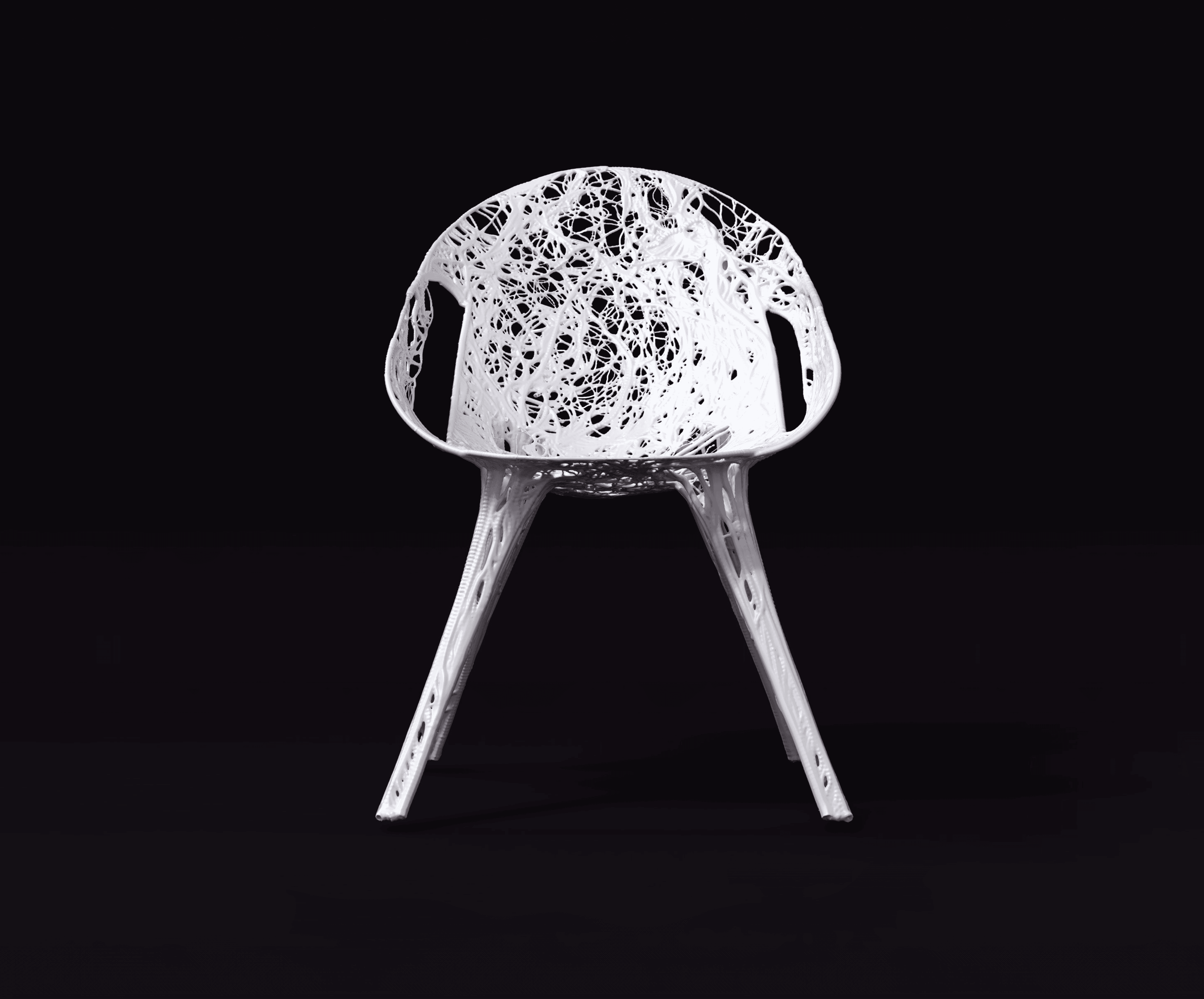
Final simulated chair.